The challenge
Working in teams of two, we were given a brief and market data, then challenged to create an AI-first food stall in one hour. The work covered the opportunity, product, brand, menu, pricing and the agents that would manage purchasing and daily pricing decisions.
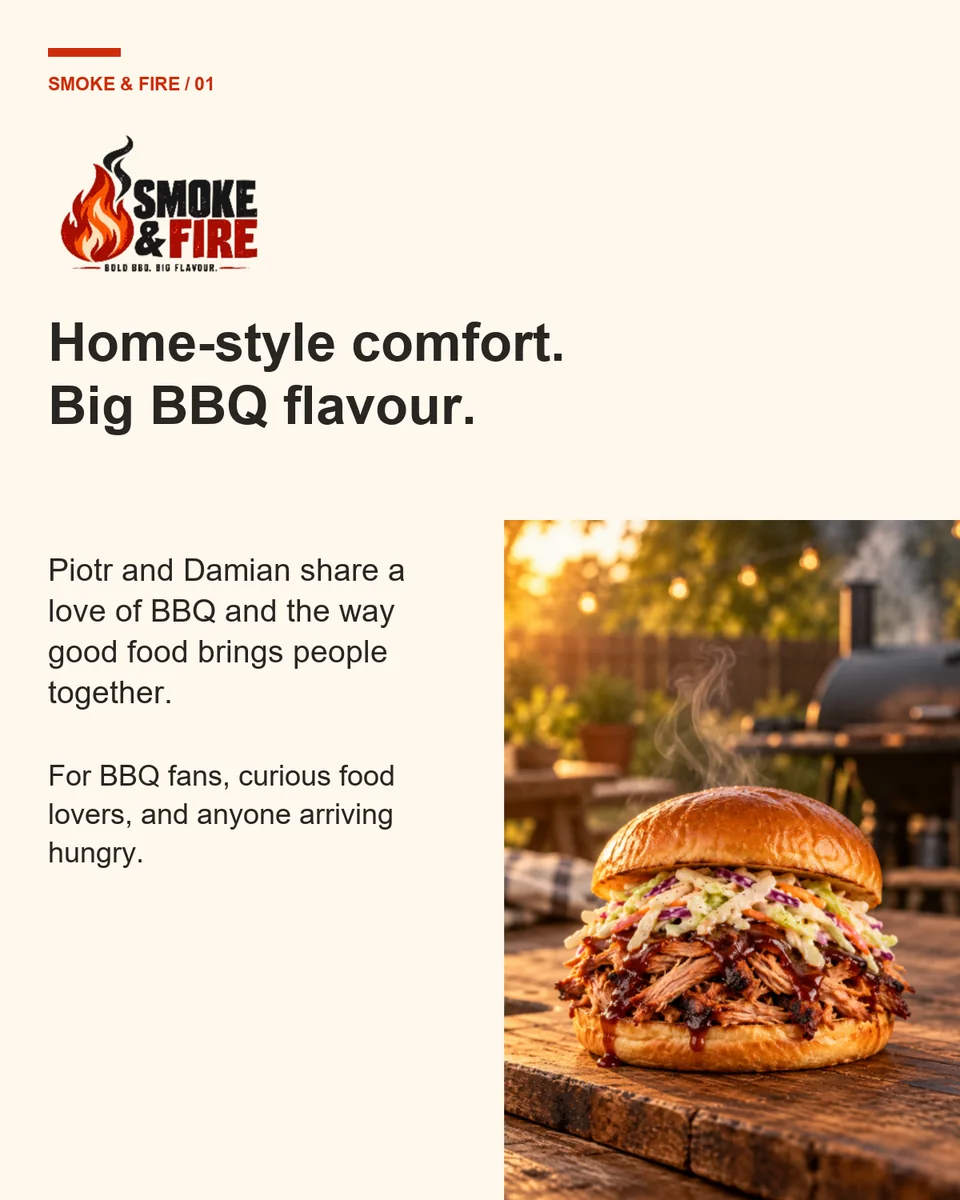
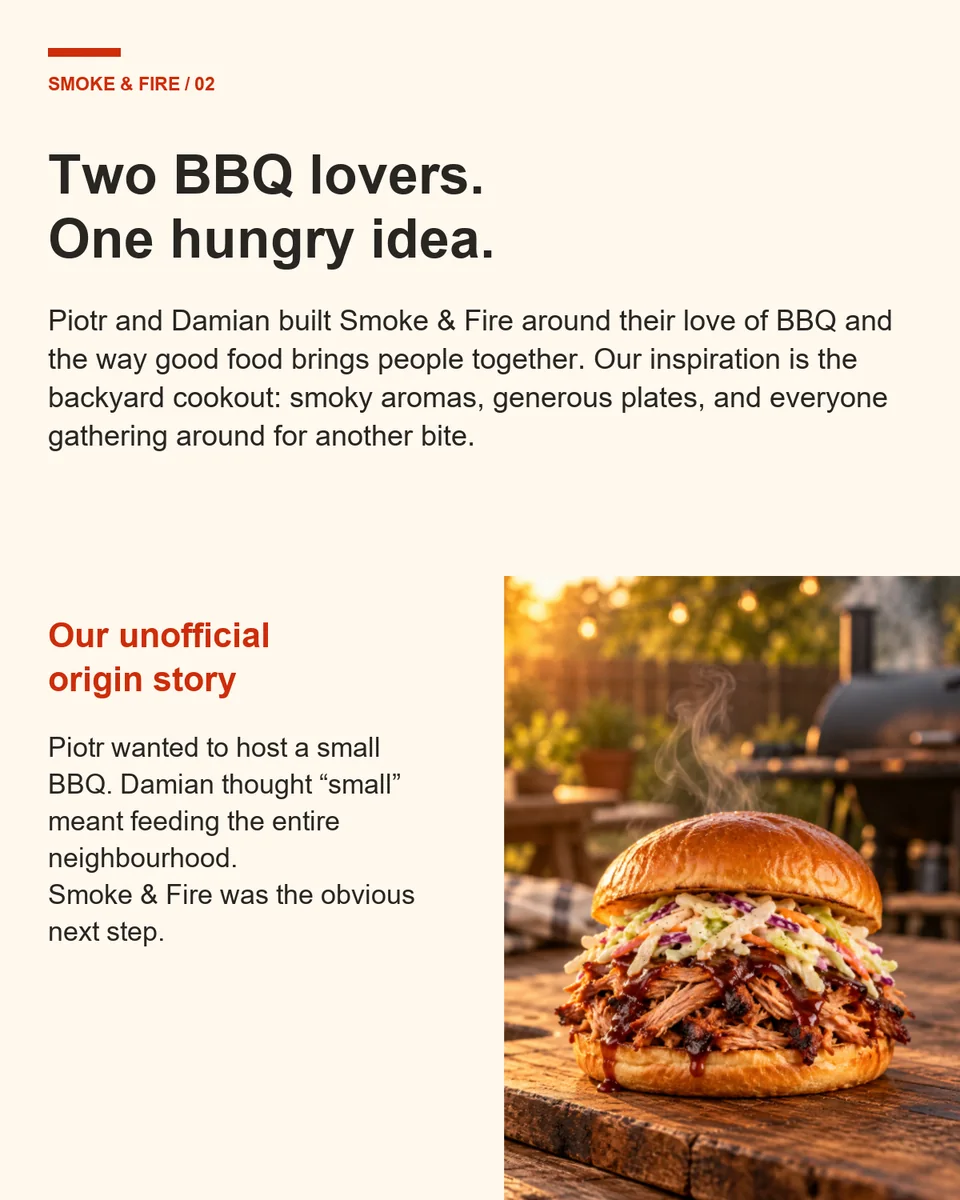
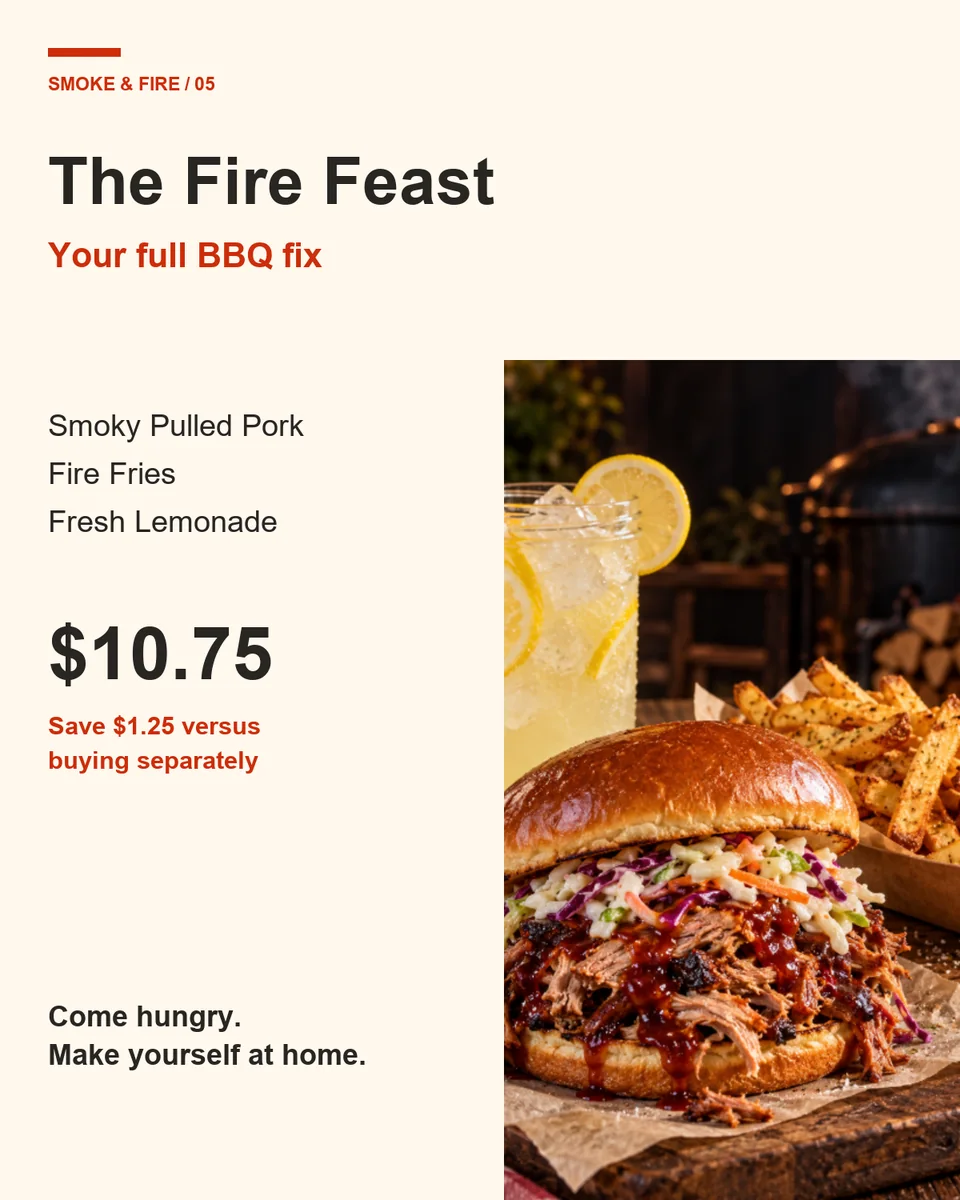
I partnered with Piotr Mazurkiewicz. We created Smoke & Fire, a BBQ street-food concept built around familiar food, generous portions and a simple promise: home-style comfort with big BBQ flavour.
What we produced
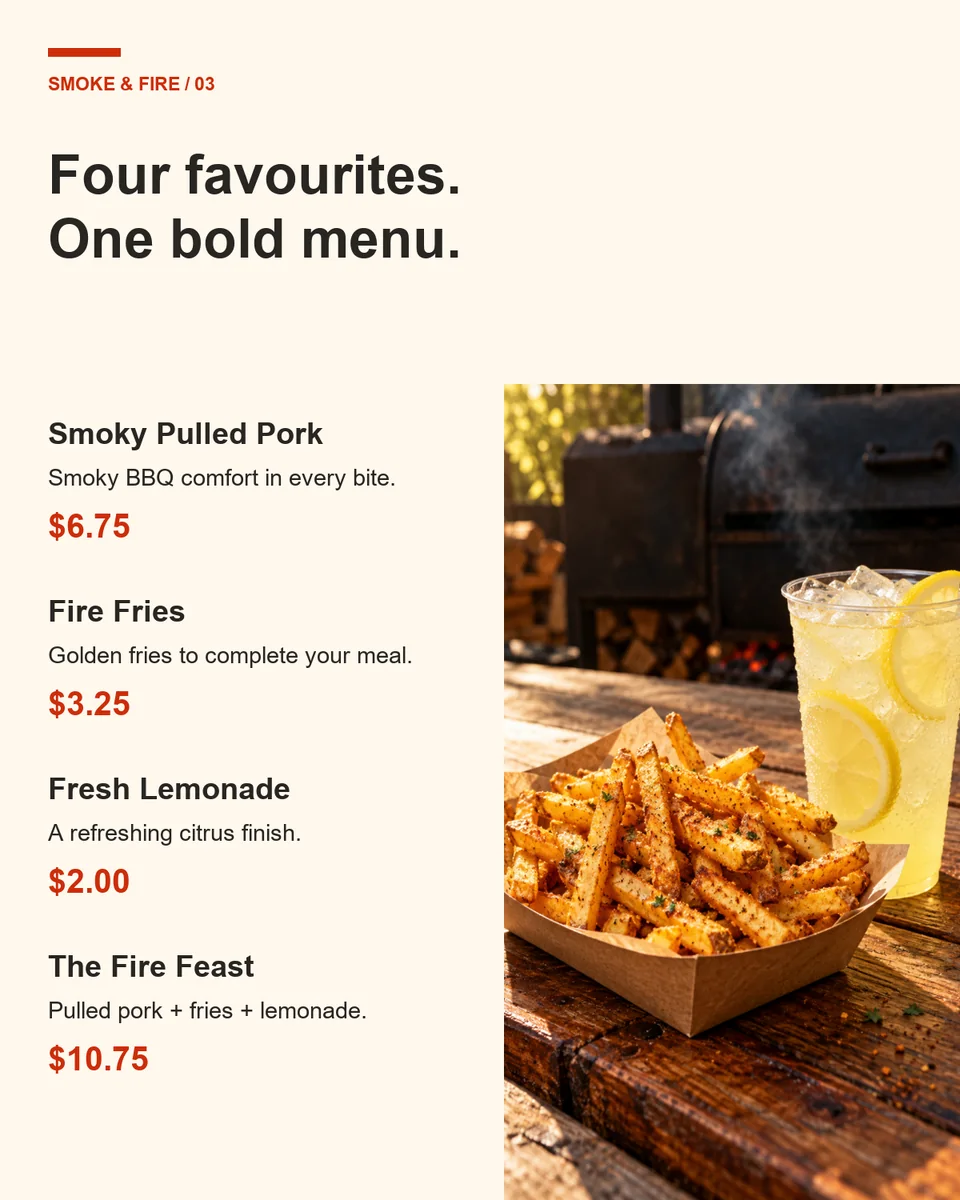
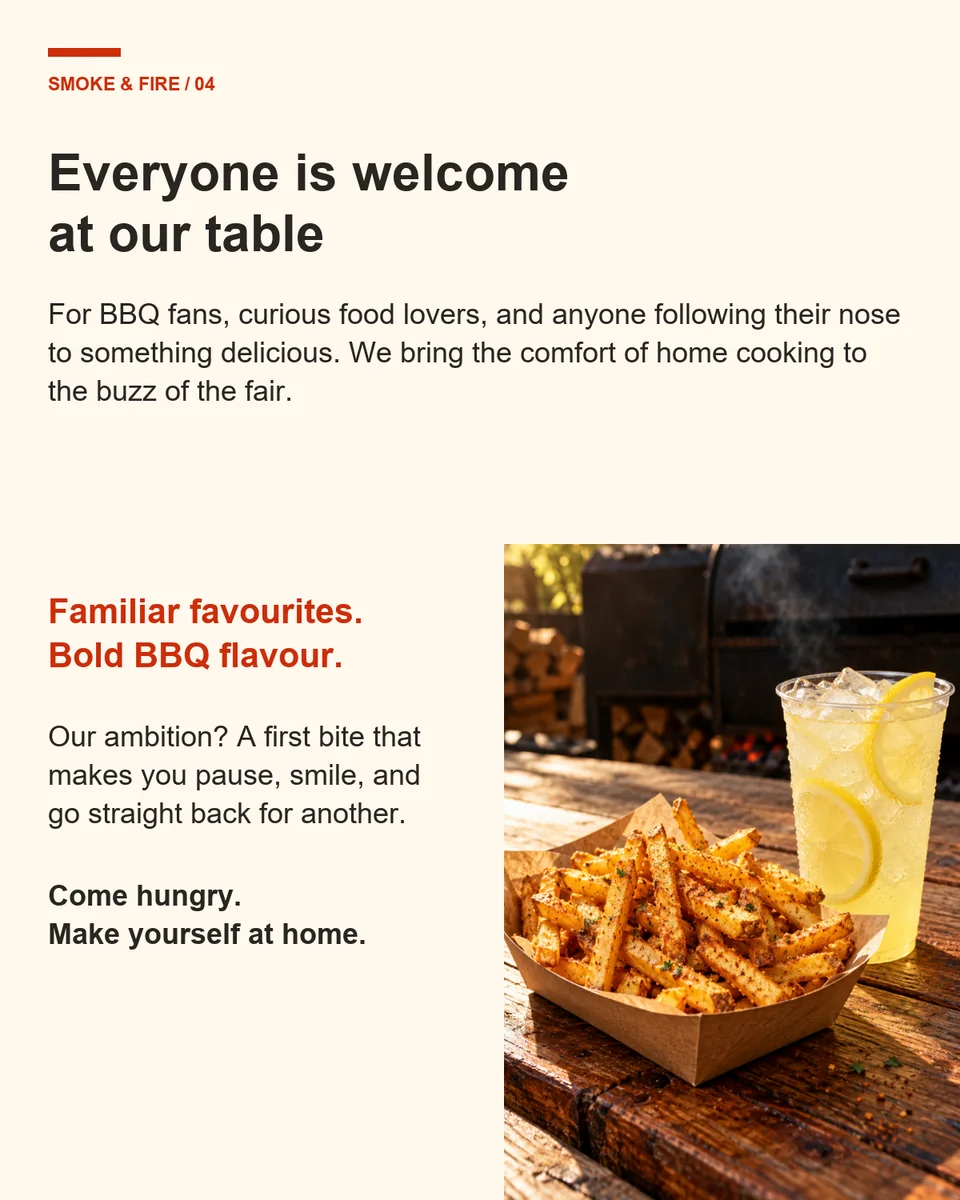
The concept included a brand, positioning, menu, individual prices and a bundled offer. The gallery shows the presentation created during the exercise.
AI was ready before the humans were
Our first mistake was assuming that setting AI to maximum reasoning would automatically produce the best result. Instead, we spent around 10 minutes waiting for it to think.
Then, with both of us keen to take the lead, we accidentally created two separate teams on the platform and lost another five minutes. AI was ready. The humans in the loop needed 15 minutes to find the loop.
That left roughly 45 productive minutes. It was still enough to move from supplied data to a coherent proposition and a set of working decisions.
The agents entered the market
The business concepts were not judged only on presentation. Our agents competed against the other teams in a week-long simulated market, making daily purchasing and pricing decisions. Performance was assessed across branding, revenue and, most importantly, profitability.
The debrief produced an unexpected result. Two winning teams had taken very different approaches. One carefully tested and refined its agents. The other accepted much more of the AI’s initial recommendation with limited intervention. Both performed well.
There was no single winning operating model. The quality of the initial design, the decisions delegated to the agents and the way the system responded to market feedback all mattered.
What the exercise revealed
1. AI compresses the distance from idea to something tangible
In less than an hour, a two-person team could develop a credible brand, menu, price architecture and agent-based operating concept. That changes what can be tested before significant time or capital is committed.
2. More reasoning is not automatically more useful
The best setting depends on the decision, the time available and the cost of delay. A faster, good-enough answer can be more valuable when the next step is learning from the market.
3. The human operating model still matters
Tools do not resolve unclear ownership. Our duplicated teams were a harmless classroom mistake, but the lesson transfers directly to larger programmes: define who decides, who acts and how people coordinate around the technology.
4. A convincing concept is not commercial validation
AI helped us create something coherent remarkably quickly. It did not tell us whether real customers would choose it, return for another order or recommend it. The next stage would be a small live test with actual customers and actual money.
The opportunity is the experiment
The most interesting outcome was not the BBQ concept itself. It was seeing how far a small team could move in a constrained hour when AI supported research, proposition design, creative development and operational decisions.
The barrier to testing an idea is falling. That makes judgement more important, not less. The advantage will come from choosing worthwhile problems, designing useful experiments and learning faster than the assumptions can harden into a plan.