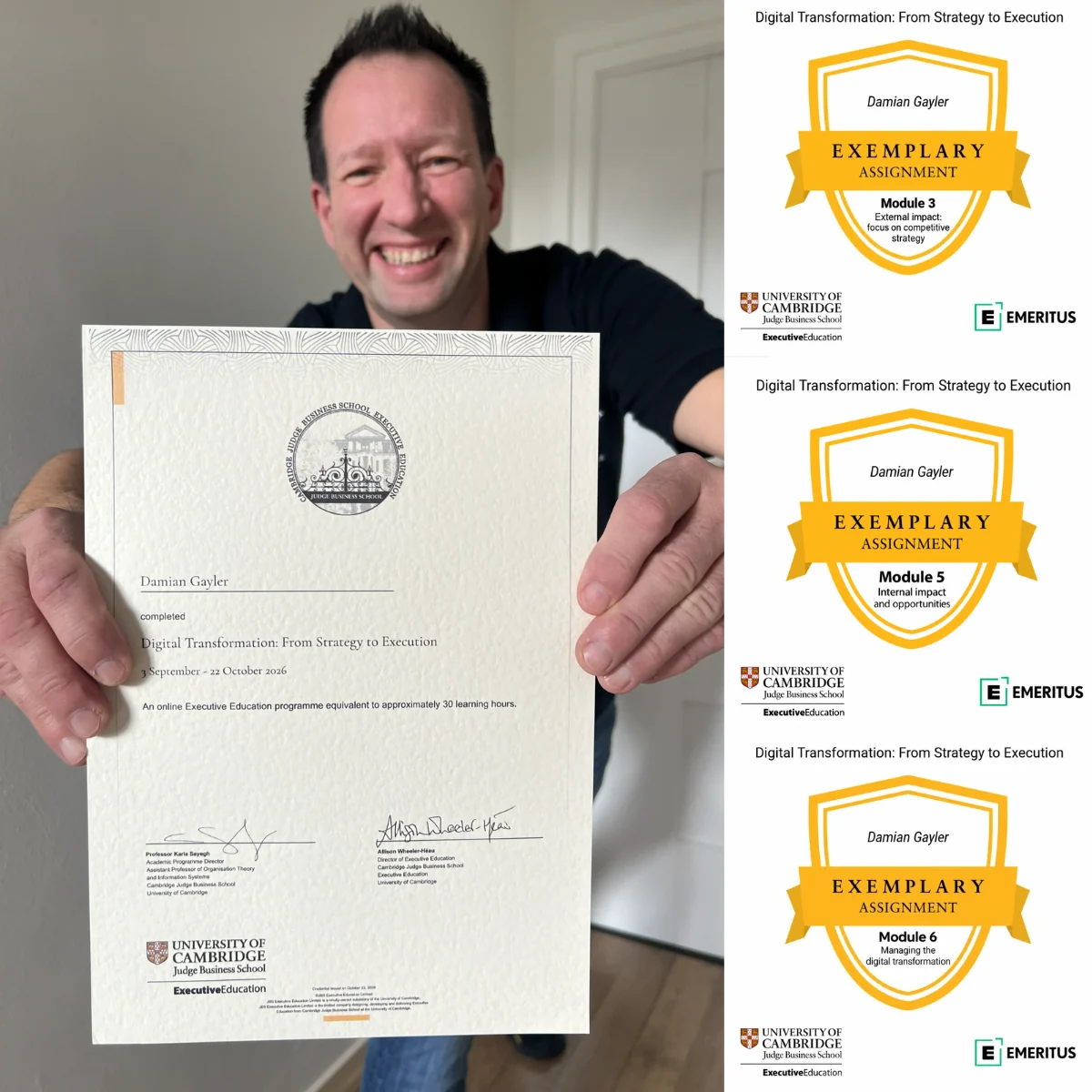
I recently completed Digital Transformation: From Strategy to Execution, an online executive education programme from Cambridge Judge Business School Executive Education.
The programme combined frameworks, case studies and assignments to examine digital transformation from the outside in and the inside out: how customer expectations and competition are changing, and what organisations must change internally in response.
Four ideas I am taking forward
1. Look beyond improving what already exists
Digital transformation is not only about making current processes faster. It creates opportunities to rethink how a business delivers value, earns revenue and works with customers and partners.
2. Translate vision into an operating model
A compelling strategy matters, but execution depends on how work actually gets done. Processes, responsibilities, skills, incentives and collaboration all need to support the intended change.
3. Build the capacity to keep adapting
A transformation plan can deliver a destination. A transformation capability allows the organisation to keep moving when customer needs, competitors and technology change again. That requires a culture where people can question, experiment and learn.
4. Turn AI efficiency into client value
AI can reduce effort and create capacity, but cost savings should not be the only ambition. The more valuable question is how that capacity can improve service, deepen insight and produce better outcomes for clients.
Recognition along the way
I was particularly pleased to receive Exemplary Assignment recognition for work covering competitive strategy, internal impact and opportunities, and managing digital transformation.
The course reinforced something I have seen repeatedly in operational transformation: technology can open the door, but execution depends on aligning strategy, work, people and learning behind it.